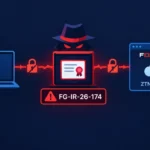
Fortinet has published security advisory FG-IR-26-185 describing an authentication bypass vulnerability in the FortiSandbox web management interface. The vulnerability has been assigned a vendor CVSSv3 score of 9.6 and allows a remote unauthenticated attacker to bypass the authentication mechanism using specially crafted HTTP requests. Organizations using FortiSandbox with a web interface accessible from the network should immediately inventory their instances and restrict access to the GUI until the vendor issues detailed recommendations.
Technical details of the vulnerability
According to the Fortinet advisory, the vulnerability is classified as Authentication Bypass Using an Alternate Path or Channel (CWE-288). This class of vulnerabilities implies that an attacker can bypass the primary authentication mechanism by using an alternative path or channel to access protected resources. In this case, the attack vector is specially crafted HTTP requests to the FortiSandbox GUI.
Key characteristics:
- Advisory identifier: FG-IR-26-185
- CVSSv3 score: 9.6 (assigned by the vendor; no independent rating identified)
- Affected component: FortiSandbox web management interface (GUI)
- Attack vector: remote, no authentication required
- CVE identifier: not specified in the advisory
It is important to note that the available advisory does not specify the exact affected FortiSandbox versions and does not provide information about an available patch. The status of active exploitation of the vulnerability is also unknown — the advisory contains no references to the use of this vulnerability in real-world attacks.
Impact assessment
FortiSandbox is a solution for analyzing malware in an isolated environment, used in corporate networks to detect advanced threats. An authentication bypass in its management interface poses a serious risk: by gaining unauthorized access to the management console, an attacker could potentially influence the sandbox configuration, disable detection mechanisms, or obtain access to the results of malicious sample analysis.
The highest risk is for organizations whose FortiSandbox web interface is accessible from untrusted networks or from the internet. Since the attack does not require authentication and is carried out via HTTP requests, the barrier to exploitation is minimal.
We have previously analyzed a vulnerability in FortiSandbox — FG-IR-26-166 with a CVSS score of 8.9. The new FG-IR-26-185 vulnerability has an even higher severity rating, indicating an ongoing series of security issues in this product.
Recommendations
Since information on affected versions and available patches has not yet been disclosed in the advisory, it is recommended to focus on reducing the attack surface:
- Inventory all FortiSandbox instances in your infrastructure and determine which of them have a GUI accessible from untrusted network segments or from the internet.
- Restrict network access to the FortiSandbox web management interface — allow connections only from trusted administrator IP addresses, using firewall ACLs or built-in access control mechanisms.
- Enhance monitoring — track anomalous HTTP requests to the FortiSandbox management interface, paying attention to attempts to access non-standard paths and endpoints.
- Monitor updates to advisory FG-IR-26-185 — Fortinet may supplement it with information on affected versions and released patches.
Given the CVSSv3 score of 9.6 and the lack of any authentication requirement for exploitation, this vulnerability requires priority attention. The main action right now is to ensure that the FortiSandbox web management interface is not accessible from untrusted networks and to promptly apply the patch as soon as Fortinet publishes information on affected versions and the fix.