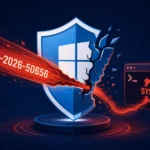
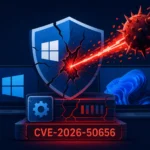
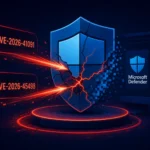
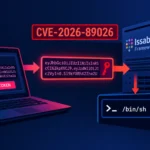
Security researcher operating under the alias Chaotic Eclipse has published a PoC exploit named ShieldBreak, which he claims completely bypasses Microsoft’s patch for vulnerability CVE-2026-50656 (CVSS 7.8) in Microsoft Defender for Windows. The publication coincided with the August Patch Tuesday, during which Microsoft fixed 421 vulnerabilities, including an actively exploited zero-day in the WinSock driver (CVE-2026-68820), already added by CISA to the KEV catalog. Organizations using Windows 11 25H2 and Windows Server 2025 should immediately install the August updates and closely monitor the situation around ShieldBreak, although the researcher’s claims have not yet been confirmed by Microsoft.
ShieldBreak: what is claimed and what is confirmed
The original vulnerability CVE-2026-50656, known as RoguePlanet, is a race condition in the Microsoft Malware Protection Engine (mpengine.dll). Successful exploitation allows an attacker to obtain a SYSTEM-level shell and execute arbitrary code. Microsoft classified it as a privilege escalation vulnerability and released a patch roughly a month after the researcher’s initial disclosure in June 2026.
According to Chaotic Eclipse, Microsoft’s security updates for CVE-2026-50656 did not completely fix the issue. Moreover, the researcher claims that the patch introduced a side effect: an 8-byte data leak when Defender attempts to open a file in certain scenarios. ShieldBreak is presented as a full bypass of this fix with a 100% success rate on the latest builds of Windows 11 25H2 (including the Canary channel) and Windows Server 2025. The researcher also notes that Windows 10 and the corresponding server editions are vulnerable, although the PoC has not yet been adapted for them.
Important caveat: all statements about ShieldBreak come from a single source — the researcher’s blog. Microsoft has not confirmed that the patch can be bypassed and, based on available information, is only now examining the report. Independent reproduction of the exploit by third-party researchers has also not been documented. Exploitation status: a public PoC exists, but use in real-world attacks has not been confirmed.
August 2026 Patch Tuesday: key vulnerabilities
The August release of Microsoft updates was one of the largest: 421 vulnerabilities, of which 236 affect Windows. Among the most critical fixes:
- CVE-2026-68820 (CVSS 7.0) — a privilege escalation vulnerability in the Windows Ancillary Function Driver for WinSock. It allows an attacker to gain SYSTEM privileges. Actively exploited in real-world attacks. CISA has added this vulnerability to the KEV catalog with a remediation deadline for federal agencies of August 25, 2026.
- CVE-2026-62832 (CVSS 7.8) — a privilege escalation vulnerability in the Windows User Profile Service (LegacyHive). It is related to improper handling of symbolic links before accessing a file. An authenticated attacker with credentials for another local account can load another user’s registry hive, gain access to that user’s data, and escalate privileges to administrator. No user interaction is required. This vulnerability was also disclosed by the researcher Chaotic Eclipse.
- CVE-2026-72971 (CVSS 5.5) — a data tampering vulnerability in the Windows Container Isolation FS Filter Driver (unionfs.sys). It was publicly disclosed before the patch was released.
Impact assessment
The highest risk is faced by organizations running Windows 11 25H2 and Windows Server 2025 in corporate environments. CVE-2026-68820 poses an immediate threat, as it is already being exploited by attackers to gain SYSTEM privileges. Combined with other vulnerabilities from the August bundle — especially CVE-2026-62832, which does not require user interaction — attackers gain multiple vectors for local privilege escalation.
As for ShieldBreak, even in the absence of independent confirmation, the mere fact that a PoC has been published creates risk: attackers can adapt the code for real-world attacks. A vulnerability in an antivirus component (mpengine.dll) is particularly dangerous, since Microsoft Defender is the default protection mechanism on most Windows systems.
Recommendations
- Install the August Microsoft updates immediately. Priority goes to CVE-2026-68820 (active exploitation). CISA’s deadline for federal agencies is August 25, 2026, but for any organization, delay is unjustified.
- Check the version of Microsoft Malware Protection Engine (mpengine.dll) on all systems. Make sure the engine is updated to the latest version via Windows Update or WSUS.
- Monitor Microsoft’s response to ShieldBreak. Until an official confirmation or denial is published, consider additional monitoring measures: auditing process creation events with SYSTEM privileges, especially those spawned by processes related to Defender.
- Audit local accounts in the context of CVE-2026-62832. Limit the number of local accounts on workstations and servers wherever possible.
- For containerized environments — update systems using Windows Container Isolation to remediate CVE-2026-72971.
The August Patch Tuesday requires prompt action primarily because of CVE-2026-68820 — a confirmed zero-day that is being exploited in real attacks. The situation with ShieldBreak remains uncertain: the researcher’s claims have not been validated by the vendor and have not been independently reproduced, but the publication of a PoC for bypassing a patch in the antivirus engine is sufficient reason to intensify monitoring of Windows 11 25H2 and Windows Server 2025 systems until Microsoft issues an official statement.