Security researchers have identified a critical architectural flaw in the Model Context Protocol (MCP), a standard used to connect large language models (LLMs) to external tools and services. The weakness, rooted in the official Anthropic MCP SDK, can be exploited for remote code execution (RCE), creating a systemic risk across the AI and LLM supply chain.
How the MCP STDIO Design Leads to Remote Code Execution
According to OX Security, the vulnerability stems from how the Anthropic MCP SDK implements communication over STDIO (standard input/output). STDIO is a common operating system mechanism used to pass data in and out of a process, but in this case, insecure default configuration values effectively create a direct path from configuration parameters to operating system command execution.
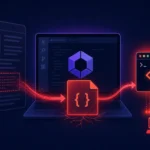
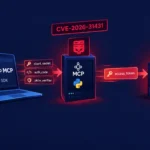
In all supported SDK languages — including Python, TypeScript, Java, and Rust — the STDIO transport allows execution of arbitrary system commands. If the specified command correctly launches an MCP STDIO server, the SDK treats the result as a valid connection descriptor. If the command is something else, it is still executed by the OS and only then fails, which is enough to turn misconfigured or malicious MCP settings into a reliable RCE primitive.
This means an attacker who can influence MCP configuration — for example, a command string for starting a tool server — can inject arbitrary shell commands. In complex LLM stacks, such configuration data may flow from user input, environment variables, or remote configuration services, dramatically broadening the potential attack surface.
Scope of Impact Across the LLM and AI Tooling Ecosystem
OX Security estimates that the architectural Model Context Protocol vulnerability affects the official Anthropic MCP SDK across all language bindings. Practically, this translates into more than 7,000 publicly reachable servers and software packages with a combined total of over 150 million downloads. This is not an isolated bug but a design pattern replicated across the AI ecosystem.
Leveraging this core weakness, researchers have already identified at least 10 distinct vulnerabilities in widely used LLM frameworks and platforms, including LiteLLM, LangChain, LangFlow, Flowise, LettaAI, and LangBot. In each case, the end result is the same: an attacker can achieve remote command execution on the host that runs the vulnerable MCP integration.
Related CVEs and Vendor Responses to the MCP Vulnerability
Multiple research teams have independently reported vulnerabilities that trace back to the same MCP STDIO design flaw. Examples include CVE-2025-49596 (MCP Inspector), CVE-2026-22252 (LibreChat), CVE-2026-22688 (WeKnora), CVE-2025-54994 (@akoskm/create-mcp-server-stdio), and CVE-2025-54136 (Cursor). Each manifests differently, but all rely on unsafe use of STDIO within the MCP protocol, enabling RCE when misconfigured or exposed.
Several vendors have responded by shipping patches, tightening default configurations, or adding guardrails to limit how commands are constructed and executed. However, Anthropic has declined to change the core MCP architecture, stating that the current behavior is “expected.” As a result, the reference implementation continues to propagate the risky pattern, and many downstream developers may assume it is safe by design.
Why This Is a Major AI Supply Chain Security Issue
The incident illustrates a classic AI supply chain security problem: a single flawed architectural decision in a foundational protocol spreads through SDKs, third-party libraries, and production systems. Just as past incidents like Log4Shell and the SolarWinds compromise demonstrated for traditional software, an issue in a widely trusted component can impact thousands of organizations simultaneously.
MCP-based LLM agents often have access to sensitive internal resources, including databases, secrets management systems, proprietary code repositories, customer data, and business workflows. Compromising an MCP server through RCE gives an attacker a powerful foothold, with the ability to exfiltrate data, manipulate AI-driven business logic, or sabotage automated processes.
Practical Security Measures for MCP and LLM Deployments
Network segmentation and strict access control for MCP services
Organizations using MCP or MCP-dependent products should avoid exposing MCP servers directly to the public internet. Instead, these services should run in restricted network segments, reachable only from trusted LLM or application components. Strong authentication, IP allow‑listing, application‑layer gateways, and firewall rules should be used to tightly control which systems may initiate MCP connections.
Hardening MCP usage, configuration, and monitoring
All external MCP configurations must be treated as untrusted input. Avoid passing unvalidated user or tenant-controlled data into MCP command strings or server launch parameters. Run MCP-compatible services inside isolated sandboxes or containers with least privilege, limiting filesystem and network access so that potential RCE has minimal blast radius. Comprehensive logging and monitoring of MCP tool invocations are critical for detecting anomalous commands or suspicious execution patterns.
Strengthening AI supply chain hygiene and dependency management
Only use MCP servers and libraries from vetted, actively maintained sources, and track advisories for new MCP-related CVEs. Maintain a software bill of materials (SBOM) for AI infrastructure, regularly audit dependencies, and pin versions to known-good releases. Established supply chain practices — integrity checks, code review of critical adapters, and periodic security testing — should be applied rigorously to LLM agents, orchestrators, and Model Context Protocol integrations.
The Model Context Protocol vulnerability underscores how quickly an architectural decision in an AI integration standard can evolve into a broad security liability. Organizations building on MCP and other LLM tooling should reassess their deployments, prioritize secure defaults, and embed supply chain risk management into their AI strategies to prevent similar systemic exposures in the future.