Rust-Based Banking Trojan VENON Targets Brazilian Financial Users

Hacker working at a dimly lit desk surrounded by glowing computer screens during a storm.

A new Windows banking trojan dubbed VENON has emerged in the Latin American cybercrime ecosystem, targeting primarily users in Brazil. The malware stands out by being written in Rust, diverging from the long‑standing regional preference for Delphi, and by combining advanced evasion techniques with cloud infrastructure and social‑engineering campaigns delivered via WhatsApp. Rust-based VENON banking … Read more


How Interactive Sandboxing and SSL Decryption Transform Phishing Detection

Cybersecurity team analyzing phishing threats in a high-tech control room.

Phishing has rapidly evolved from basic mass-mail scams into one of the hardest threats to detect at an early stage. Attackers now rely on trusted cloud services, realistic authentication flows and fully encrypted HTTPS traffic that easily bypasses traditional security tools. For CISOs and SOC leaders, this creates a simple reality: phishing detection must operate … Read more

China-Linked APT Conducts Long-Term Cyber Espionage Against Southeast Asian Defense Sector

Military personnel monitors multiple screens in a cluttered cyber warfare environment.

Government agencies and military organizations across Southeast Asia have become the focus of a long-running, highly targeted cyber espionage campaign that has likely been active since at least 2020. According to threat intelligence from Palo Alto Networks Unit 42, the activity cluster, tracked as CL‑STA‑1087 (where “STA” denotes state-aligned), is assessed to be linked to … Read more

Samsung Galaxy Connect Bug Locks C Drive on Windows 11 Samsung Galaxy Book PCs

Microsoft and Samsung buildings overlook a busy highway with giant displays.

A defective update of the Samsung Galaxy Connect application has triggered a severe failure on certain Samsung laptops and desktop PCs running Windows 11. Affected systems suddenly lost access to the system partition C:\, and essential applications stopped launching, effectively rendering devices unusable without advanced recovery measures. Windows 11 “C:\ is not accessible — Access … Read more

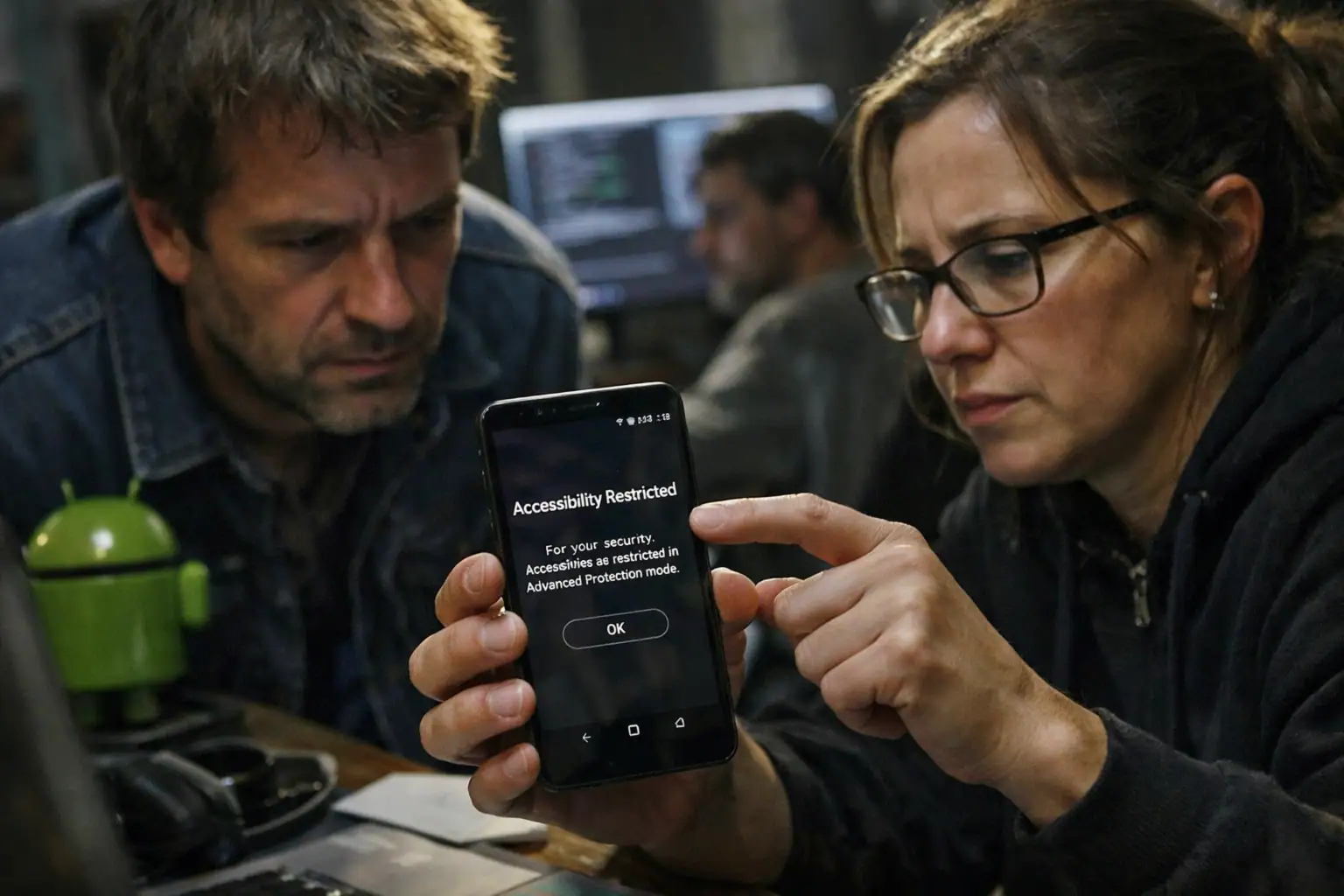
Android 17 Raises the Security Bar with Stricter Accessibility Controls and Granular Contacts Permissions

Two individuals examining a phone displaying an "Accessibility Restricted" message.

Android 17 is introducing a new wave of hardening measures aimed at users and organizations with elevated security requirements. The most significant changes focus on restricting the Accessibility Services API when Android Advanced Protection Mode (AAPM) is enabled and on implementing fine-grained control over app access to contacts. Together, these updates are designed to shrink … Read more

Google Chrome Zero‑Day Vulnerabilities CVE‑2026‑3909 and CVE‑2026‑3910 Patched in Emergency Update

Close-up of a cracked screen featuring a colorful Chrome logo and circuit components.

Google has released an out-of-band security update for Google Chrome to address two actively exploited zero-day vulnerabilities, tracked as CVE‑2026‑3909 and CVE‑2026‑3910. The flaws affect critical browser components — the Skia 2D graphics library and the V8 JavaScript engine — and already have working exploits in the wild, increasing the risk for both individual users … Read more

Slopoly: AI-Generated PowerShell Backdoor Powering Interlock Ransomware Attacks

Scene split between a hacker and an AI, representing cybersecurity themes.

IBM X-Force researchers have identified a new PowerShell-based backdoor named Slopoly, which they assess was very likely created with the help of generative artificial intelligence. The malware has been observed in multi-stage attacks delivering the Interlock ransomware, enabling threat actors to maintain stealthy access for more than a week, exfiltrate data, and then launch encryption … Read more

FBI Issues Warning on Malicious Steam Games Used for Cryptocurrency Theft

FBI agents engaged in intense investigation in a dimly lit room.

The U.S. Federal Bureau of Investigation is calling on Steam users worldwide to come forward if they installed a set of malicious games between May 2024 and January 2026. These titles, distributed through the Steam platform, allegedly contained hidden malware used to steal cryptocurrency, browser data, and online accounts, including Steam profiles. FBI requests information … Read more

Telus Digital Data Breach: ShinyHunters Attack Highlights Critical BPO and Cloud Security Gaps

GCP Access Key card held by a hand amid cluttered cables and items.

Canadian outsourcing provider Telus Digital, a subsidiary of telecom operator Telus, has confirmed a cyberattack and data breach that is already being described as one of the most serious compromises of a BPO (Business Process Outsourcing) provider in recent years. The hacking group ShinyHunters claims to have stolen almost one petabyte of data, raising serious … Read more

QuickLens and ShotBird: How Trusted Chrome Extensions Became Malware Delivery Tools

Aerial view of San Francisco with browser icons and coding scene overlay.

Two previously trusted Google Chrome extensions — QuickLens and ShotBird — have been transformed into attack tools following a change of ownership. Researchers from Annex Security and independent analyst monxresearch-sec documented how new versions of these extensions began executing arbitrary code, collecting user data, and distributing malware via fake Chrome update prompts. Malicious Chrome extensions … Read more