The current state of internet security reinforces the same pattern: even mature organizations continue to overlook basic security hygiene, while the time between disclosure of a vulnerability and its active exploitation keeps shrinking. The recent supply chain attack leveraging the popular Trivy vulnerability scanner, combined with a new wave of critical CVEs, illustrates how fragile modern software delivery pipelines remain.
Trivy supply chain attack: compromise of releases and CI/CD pipelines
Trivy, maintained by Aqua Security, is one of the most widely used open source vulnerability scanners, with more than 32,000 GitHub stars and over 100 million image pulls on Docker Hub. That popularity turned it into a high-value target for adversaries.
Attackers managed to compromise official Trivy releases and related GitHub Actions that are embedded in thousands of CI/CD (Continuous Integration / Continuous Delivery) pipelines. Legitimate build artifacts were backdoored with malware designed to exfiltrate credentials and secrets used during build and deployment processes.
The most damaging factor was not only the initial compromise, but the way many affected organizations failed to rotate exposed secrets in time. Reused tokens and keys enabled a chain reaction, leading to follow‑on compromises of other projects and infrastructures that relied on the same credentials.
According to available information, this facilitated the spread of a self‑propagating malware strain, dubbed CanisterWorm, tailored to move laterally across the software supply chain and infect additional CI/CD environments.
GitHub Actions and DevOps tooling as a growing attack surface
The Trivy incident aligns with a broader trend: attacks on developer tools and GitHub Actions. Automation platforms have become the backbone of the software supply chain. A successful compromise provides direct access to source code, infrastructure secrets and mechanisms for delivering updates to end users.
GitHub has already taken steps to reduce these risks. For example, in December 2025, the default behavior of workflows using the pull_request_target event was changed to make some attack paths harder to exploit. However, the Trivy case shows that platform-level safeguards are not enough. Organizations must develop a threat model specifically for their CI/CD processes, including strict controls around third‑party actions, dependency pinning, secret management and artifact integrity verification.
New critical CVEs: prioritizing what to patch first
Industry data consistently shows that widely known vulnerabilities are routinely exploited within days or weeks of disclosure. Against this backdrop, several critical CVEs reported this week affect high‑profile products and are already drawing attention from security researchers and threat actors.
The following vulnerabilities merit immediate review and prioritization:
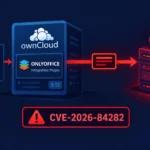
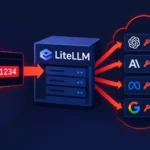
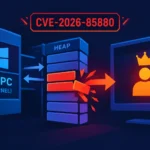
CVE-2026-21992 (Oracle), CVE-2026-33017 (Langflow), CVE-2026-32746 (GNU InetUtils telnetd), CVE-2026-32297 and CVE-2026-32298 (Angeet ES3 KVM), CVE-2026-3888 (Ubuntu), CVE-2026-20643 (Apple WebKit), CVE-2026-4276 (LibreChat RAG API), CVE-2026-24291 (RegPwn, Microsoft Windows), CVE-2026-21643 (Fortinet FortiClient), CVE-2026-3864 (Kubernetes), CVE-2026-32635 (Angular), CVE-2026-25769 (Wazuh), CVE-2026-3564 (ConnectWise ScreenConnect), CVE-2026-22557 and CVE-2026-22558 (Ubiquiti), CVE-2025-14986 (Temporal), CVE-2026-31381 and CVE-2026-31382 (Gainsight Assist), CVE-2026-26189 (Trivy), CVE-2026-4439, CVE-2026-4440, CVE-2026-4441 (Google Chrome), CVE-2026-33001 and CVE-2026-33002 (Jenkins), CVE-2026-21570 (Atlassian Bamboo Data Center) and CVE-2026-21884 (Atlassian Crowd Data Center).
Organizations should at minimum identify whether these products are deployed in their environment, perform risk-based prioritization, and promptly apply patches to the most critical systems. Priority should be given to internet‑exposed services and supply chain components such as CI/CD platforms, access management systems, browsers and remote administration tools.
Old weaknesses, new attacker techniques
Beyond high‑profile supply chain events, attackers continue to exploit long‑known weaknesses: insecure IoT devices, publicly exposed storage (such as open directories and cloud buckets holding sensitive data), and insufficient protections for employees’ mobile devices.
At the same time, threat actors are investing in more patient, stealthy malware designed for long‑term persistence inside corporate networks. State‑sponsored operations increasingly rely on misconfigured services, rushed emergency patches and overlooked defaults, rather than purely novel zero‑day exploits. In many incidents, the real damage stems from the time lag between detection of a problem and its complete remediation.
Legal and technical boundaries for security tooling
Most modern tools for vulnerability analysis, infrastructure scanning and attack simulation are freely available and inherently dual‑use. Such tools must only be used within the bounds of applicable law, in test or isolated environments, and after careful review of their source code or provenance.
Running unvetted tooling with elevated privileges in production networks significantly increases the risk of secondary compromise, especially in the context of supply chain attacks similar to the Trivy incident.
The core lesson from these developments is that the main problem rarely lies in an individual CVE. The real risk emerges in the gaps: between discovering a vulnerability and detecting active exploitation, between release of a patch and its deployment, and between knowing about a risk and taking concrete action. To narrow these gaps, organizations should now: update mobile devices and user endpoints, audit all CI/CD and GitHub Actions components, rotate secrets at the slightest suspicion of exposure, and avoid storing highly sensitive data—such as cryptocurrency recovery phrases—in plain notes or unsecured cloud services. Systematically closing these basic issues will greatly reduce the chances that the next major security headline will involve their infrastructure.